Prague’s metro and trams are usually the easiest way to move between sights, especially if you stay near the centre. They are relatively affordable, frequent and cover most areas visitors want to see. With a few basic rules about tickets, validation and peak times, you can ride confidently and avoid fines or confusion.
Quick summary
- Buy and validate a time-based ticket before your first ride to avoid fines.
- Use metro for longer hops and trams for short, scenic trips between sights.
- Expect more crowds in rush hours; plan sightseeing for mid-morning or late afternoon.
- Most visitors do well with a 24 or 72-hour pass; keep some coins or card ready for machines.
Understanding Prague’s Metro and Tram Network
Prague’s public transport is built around three metro lines (A, B and C) and an extensive tram network that fills the gaps above ground. The metro runs mostly underground and is useful for covering longer distances quickly, such as between the main train station, Old Town area, and residential districts. Trams run frequently on surface routes and are convenient for short hops between major sights, offering a more scenic ride.
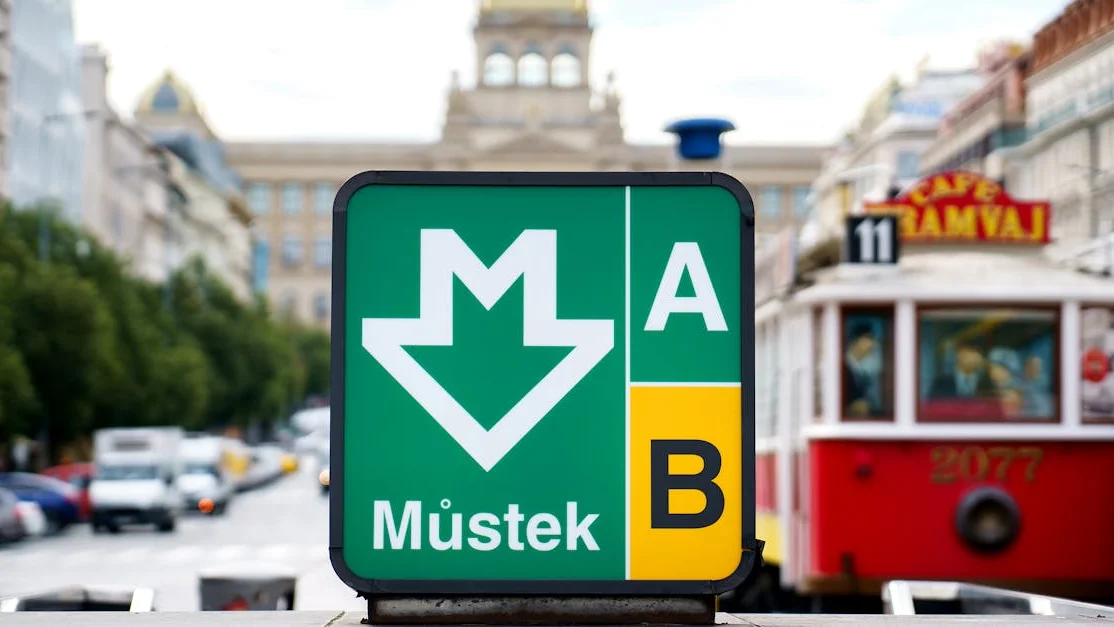
For most visitors, you will mainly use metro lines A and B, plus central tram routes around Old Town, Malá Strana and Vinohrady. Key interchange stations include Můstek (A/B), Muzeum (A/C) and Florenc (B/C), where it is straightforward to change lines by following clear color-coded signs. Metro and trams share the same ticket system, so you can freely transfer within the time limit of your ticket without buying a new one.
- Metro lines: A (green), B (yellow), C (red) with clear color-coded signage.
- Trams: dense network covering Old Town, Malá Strana, Castle area, and inner neighborhoods.
Tickets, Passes and How to Validate Them
Prague’s ticket system is usually time-based. Instead of paying per ride, you buy a ticket valid for a certain duration, such as around 30 minutes, 90 minutes, 24 hours or 72 hours. Short-term tickets and day passes are often the most practical for visitors who plan to ride several times a day. Prices can change, but as a rough indication, single tickets are typically just a few euros or less, and day passes cost more but become better value if you make multiple trips.
You must validate your paper ticket before your first journey using the yellow machines in metro stations or on trams and buses. If you buy a ticket directly on board from a contactless validator (available on many trams and some buses), it is usually validated automatically at the moment of purchase. Inspectors carry out spot checks, and fines can be significant, so it is worth double-checking that your ticket is stamped with a time and date or correctly activated before travelling.
- Time-based tickets allow unlimited transfers within their validity period.
- Always validate paper tickets in a yellow machine before boarding or immediately after boarding if the machine is on the vehicle.
How to Ride the Metro: Practical Steps for Visitors
Using the metro in Prague is typically straightforward if you follow the signage. Stations display the line color and final station name for each direction, so check the map and follow the direction of the last stop on the line. Trains usually run every few minutes during the day, with slightly longer intervals in late evenings and on weekends. Platforms are generally well marked, and station announcements are made in Czech, but line diagrams above the doors make it easy to track your stop.
Many central sights are within walking distance of metro stations like Staroměstská (Old Town), Malostranská (for Charles Bridge and Malá Strana), Muzeum (for Wenceslas Square) and Hradčanská (for walking up to Prague Castle). For airport connections, you normally combine a bus with the metro rather than taking the metro directly to the terminal. As schedules and routes can change, it is sensible to check current connections in a journey planner or local app before you travel.
- Follow the end-station name (e.g., “Nemocnice Motol”) to choose direction.
- Keep to the right on long escalators; locals often walk on the left side.
Using Trams: Scenic Routes and Everyday Tips
Trams are often the most pleasant way to move between central neighborhoods, as they run above ground and let you see the city as you travel. Doors are usually opened by pressing a button or handle once the tram stops, and you should allow passengers to get off before boarding. Inside, route maps and digital displays show the next stops, which helps you follow your journey even if you do not understand the announcements.
Popular visitor-friendly tram routes link places like Národní třída, Malá Strana, Prague Castle area and Letná. Travel times vary with traffic and weather, so allow a little extra time if you have tickets or reservations elsewhere. When planning your day, trams can link up major sights into a simple route, and you can combine them with walking tours or offline maps in apps such as the Prague Tour Guide App, which offers curated walking routes and offline navigation.
- Press the door button to open; some older trams require a handle to be pulled.
- Hold onto rails or straps, as trams can brake sharply in traffic.
Best Times to Ride, Typical Visit Length and Night Services
Rush hours in Prague are usually on weekday mornings and late afternoons, when locals commute to work and school. During these times, metro carriages and some tram lines can feel crowded, especially near major transfer stations. If your schedule allows, aim to ride between about 9:30 and 15:30 or later in the evening, when it is often more comfortable and easier to find a seat. Weekends can be busy around popular event days or holidays, but the atmosphere is usually manageable for most visitors.
For a typical short city break of two to four days, many visitors choose a 24 or 72-hour pass to cover airport transfers, sightseeing trips and evening outings. Night trams and some night buses usually replace or supplement daytime services after the metro closes around midnight. Night lines follow special routes and timetables that can differ from daytime numbers, so checking a current map or app before a late return to your accommodation is advisable.
- Avoid peak commuting hours if you prefer less crowded trains and trams.
- Metro usually runs from early morning until around midnight; night trams cover many central routes afterwards.
Buying Tickets: Machines, Apps and Where to Get Help
Tickets can usually be bought from yellow or grey ticket machines in metro stations, some tram stops and selected newsstands or kiosks. Many newer machines accept cards as well as coins, but it is still useful to carry some local currency in case a machine only takes cash or a card reader is temporarily unavailable. On many modern trams you can also buy a ticket directly using a contactless card at a small onboard validator, which prints or registers your ticket immediately.
If you prefer to plan ahead, several journey-planning and ticket apps support Prague’s public transport system, and official or partner apps may offer digital tickets that you activate on your phone. Staff at major metro stations and information points can usually provide maps and basic guidance in English or other languages. When in doubt about a route, it is practical to show the name of your destination written down, as this reduces the risk of misunderstandings.
- Use station ticket machines for paper tickets and day passes; check if they accept cards.
- Consider a transport or city app for up-to-date routes, delays and digital tickets.
Combining Public Transport with Sightseeing and Nearby Areas
Metro and trams make it easier to link major sights into a logical route, saving time and energy. For example, you might take the metro to Hradčanská, walk through Prague Castle and down to Malá Strana, then use a tram to cross the river toward the National Theatre or Wenceslas Square. Public transport is also useful for reaching viewpoints like Letná Park or the residential cafés and restaurants in districts such as Vinohrady and Holešovice, which may not be on typical walking-only itineraries.
For day trips just outside the centre, you can often combine metro or tram with regional trains or buses from hubs like Smíchovské nádraží, Florenc or Nádraží Holešovice. Fares and zones vary once you leave the central area, so it is sensible to check current information about validity of your ticket or pass before travelling further out. Using a mix of walking, trams and metro can help you see more in a limited visit while keeping overall transport costs moderate.
- Plan routes that combine metro for longer jumps and trams for short scenic links between sights.
- Use transport hubs like Florenc or Smíchov for trips to nearby towns or attractions.
Frequently asked questions
Do I need a new ticket every time I change between metro and tram?
Usually you do not. Prague uses time-based tickets, so as long as your ticket is still within its validity period, you can transfer between metro, trams and most city buses without buying a new one. Always check the printed or digital expiry time.
How much does public transport in Prague typically cost?
Prices can change, but single tickets are generally a few euros or less, and 24 or 72-hour passes cost more upfront yet often work out cheaper if you make several journeys per day. It is advisable to confirm current fares on official transport websites or at station machines before buying.
Is it safe to use Prague metro and trams at night?
Many visitors and locals use metro and trams in the evening without problems, but as in most cities, it is sensible to stay aware of your belongings, especially in crowded vehicles or at major stops. After the metro closes around midnight, night trams and buses operate on special routes, so check timetables in advance.
How can I find the best route between Prague sights?
You can use official journey planners, station maps and reputable mobile apps to check connections and travel times. Offline-capable apps, such as the Prague Tour Guide App with offline maps and curated walking routes, can be useful when you do not have mobile data, especially for combining walking with tram or metro segments.
Important note
- Routes, timetables and ticket prices can change. Please verify current information on the official DPP or PID websites.
- Prices, fees and exchange rates are indicative only and may change.
- Opening hours may change seasonally or without notice. Check the official venue website before visiting.
Sources and official links
Prague Tour Guide App – Prague app (coming soon)
We are building a Prague app with offline maps and practical walking routes.

Scriptus
Content Creator
I am lost in this world so I have my bio still on my desktop instead of this website.